A faded photograph rests on a stone terrace, capturing the Palmeraie as it once was-quiet, untouched, where palm groves whispered more than they dazzled. Today, the same breeze carries the scent of jasmine through manicured gardens and infinity pools that mirror the Atlas Mountains. The transformation hasn’t erased its soul; it’s refined it. Now, this enclave stands as a global emblem of luxury living, where heritage and modernity coexist. For international buyers eyeing a meaningful investment, the 2026 Palmeraie villa market offers more than real estate-it offers a recalibrated lifestyle anchored in serenity, beauty, and long-term value.
Essential Features of Modern Luxury Villas in the Palmeraie for 2026
The Evolution of Landscaped Gardens and Private Oases
In 2026, the garden is no longer just an aesthetic addition-it’s a statement of values. The most sought-after villas in the Palmeraie integrate landscapes that reflect environmental mindfulness and cultural authenticity. Instead of imported flora, designers now favor endemic species like date palms, olive trees, and succulents that thrive naturally in the arid climate. This shift reduces water consumption while enhancing the sense of place. In Bab Atlas, plots often exceed 2,500 m², allowing for layered green spaces that blend seclusion with openness. These private oases are curated to feel both wild and intentional.
Architectural Trends: Blending Terracotta with Glass
The architectural language of the modern Palmeraie villa dances between tradition and innovation. Invisible Architecture-a defining trend-erases rigid boundaries between interior and exterior. Floor-to-ceiling glass walls open entirely, transforming living rooms into open-air pavilions during mild winters and warm evenings. The use of handcrafted Tadelakt plaster on walls and bathrooms adds texture and authenticity, while flat terracotta roofs nod to Moroccan heritage. Inside, minimalist layouts allow art, light, and landscape to take center stage. Materials are locally sourced whenever possible, supporting sustainability without sacrificing elegance.
Next-Generation Swimming Pools and Wellness Areas
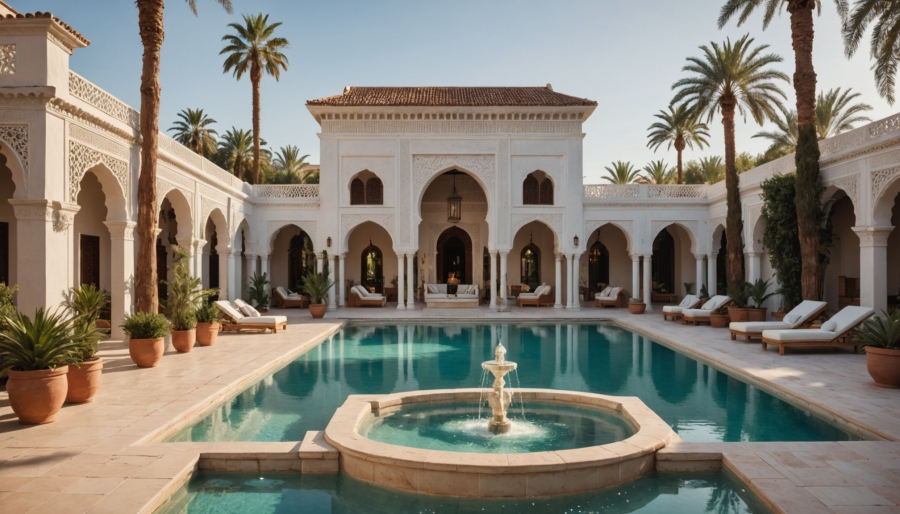
The pool is now a wellness centerpiece. Beyond simple recreation, today’s villas feature infinity-edge pools that extend visually into the palm canopy, often accompanied by integrated spa zones-think outdoor showers, hydromassage corners, and shaded lounging decks. Some estates go further, incorporating private hammams, fitness pods, or meditation gardens adjacent to the water. These features aren’t just luxury; they directly impact rental appeal. International buyers seeking high-yield seasonal lets know that a well-designed aquatic retreat can elevate nightly rates by 30% or more during peak season.
- Native landscaping with drought-resistant plants
- Full-height retractable glass walls for seamless indoor-outdoor flow
- Private spa zones with hammam or outdoor treatment space
- Smart irrigation systems with water recycling
- Infinity pools aligned with mountain or garden views
International investors looking for a secure and prestigious lifestyle can easily find your villa in Marrakech through our specialized listings, where each property balances aesthetic excellence with functional intelligence.
Investment Opportunities for International Buyers in Marrakech
Capital Appreciation in the Prestigious Bab Atlas Sector
The Palmeraie, and particularly the Bab Atlas corridor, remains the most resilient segment of Marrakech’s luxury market. Unlike newer developments on the city’s outskirts, properties here benefit from established prestige and limited supply. The area is protected by strict urban planning rules-no high-rises, no mass housing-ensuring scarcity and exclusivity. Over time, this has translated into steady capital growth, even during regional economic fluctuations. For 2026, the trend continues: demand outpaces inventory, especially for villas between 400 and 700 m² with generous plot ratios.
Turnkey Properties vs. Custom-Built Estates
Buyers face a strategic choice: immediate ownership or long-term creation. Turnkey villas offer instant access, fully compliant with current regulations and ready for occupancy or rental. These are ideal for those who want to avoid construction delays or logistical complexity. On the other hand, custom-built estates allow complete personalization-from floor plans to material selection. While this path takes 12 to 18 months on average, it ensures the property aligns perfectly with lifestyle needs. Some investors choose both: a finished villa for current use, and a second plot reserved for future development.
Legal and Fiscal Advantages for 2026 Acquisitions
Foreign investors benefit from Morocco’s open property ownership framework. Non-residents can acquire real estate freely, with no restrictions on currency repatriation. While there’s no property tax for primary residences, rental income is subject to declaration and taxation-typically offset by allowable expenses. The government continues to encourage foreign investment, particularly in tourism-linked assets. That said, structuring ownership correctly-whether through personal title, offshore entity, or Moroccan SCI-requires expert legal guidance. A well-advised purchase today can simplify inheritance, management, and resale down the line.
Lifestyle Enhancement: What to Expect in the Palmeraie District
Security and Privacy in Exclusive Gated Communities
Privacy isn’t a feature here-it’s a given. Most luxury villas sit within secure, gated compounds with 24/7 surveillance, controlled access points, and discreet staff protocols. The atmosphere is one of calm: winding palm-lined roads, minimal traffic, and an absence of commercial noise. Unlike the bustling Gueliz or Medina, the Palmeraie feels like a sanctuary. Yet, it’s only a 10-minute drive from high-end boutiques, international schools, and gourmet restaurants. This duality-tranquility within reach of urban energy-is precisely what draws families and executives alike.
Proximity to World-Class Golf Courses and Leisure
Leisure is woven into the district’s fabric. Within minutes, residents access some of Morocco’s finest golf courses-Amelkis, Royal Golf, and Al Maaden-each offering championship-level play and lush greenery. Equestrian centers, tennis clubs, and private dining venues cater to diverse tastes. For seasonal owners, this convenience is invaluable: arrive on a Friday, play 18 holes Saturday morning, host a sunset dinner, and depart Sunday evening-without ever needing to venture far. The infrastructure supports a high-quality, low-friction lifestyle that feels effortless, on the surface-but is carefully curated beneath.
Comparative Overview of Luxury Property Categories
Sizing and Land Ratio Considerations
One of the Palmeraie’s defining characteristics is its generous land-to-building ratio-a rarity compared to denser areas like Hivernage or Chiadma. While other districts prioritize vertical development, here, horizontal expansion is the norm. This allows villas to breathe, with gardens, courtyards, and service wings integrated naturally. The table below illustrates how property tiers differ in footprint and outdoor space, reflecting different investment and lifestyle goals.
| Property Tier | Average Garden Size | Bedroom Count | Staff Quarters |
|---|---|---|---|
| Boutique Villa | 800 - 1,200 m² | 4 - 5 | Optional, compact |
| Grand Estate | 1,500 - 2,500 m² | 5 - 7 | Standard, separate entrance |
| Palace Style | 3,000+ m² | 7 - 10+ | Full service wing, kitchen, dorms |
This spatial generosity also enhances future flexibility-whether for expansion, rental subdivision, or creating experiential guest accommodations. It’s a key factor in long-term value retention.
Strategic Selection for Different Buyer Profiles
Primary Residences for Expatriate Families
For families relocating to Marrakech, the Palmeraie offers a rare blend of safety, space, and community. Many compounds include private roads and shared green areas, ideal for children. Proximity to international schools-like the American School or Lycee Louis Pasteur-makes daily logistics manageable. Homes in this category prioritize functional layouts: open-plan kitchens, staff rooms, multiple living areas, and shaded outdoor play zones. Energy efficiency-through thermal insulation and smart shading-is also critical for year-round comfort. These villas are designed not just to impress, but to live in, day after day.
Secondary Homes with High Rental Demand
For investors seeking yield, the vacation rental market in the Palmeraie remains robust. Villas with 5+ bedrooms, high-end finishes, and strong visual appeal often achieve full occupancy during spring and autumn. Professional property management services handle bookings, maintenance, and guest coordination, allowing owners to remain hands-off. The key to success? A property that photographs beautifully, offers luxury amenities, and sits in a quiet yet accessible location. On the rental market, a well-positioned villa can generate returns of 4% to 6% net annually, with potential for additional income during festival seasons like Marrakech du Rire or the International Film Festival.
Common Questions from International Buyers
What is the most common mistake when choosing land in the Palmeraie?
Many buyers overlook the importance of water access rights and soil composition. The Palmeraie's ecosystem relies on ancient khettara irrigation systems, and not all plots have guaranteed water allocation. Poor soil drainage can also hinder garden development, especially for palm tree planting. Conducting a full environmental and legal due diligence before purchase is essential.
How do 2026 building regulations impact villa extensions?
Building codes in the Palmeraie are strictly enforced by the VNA (Ville Nouvelle d’Amelkis) authority. Height limits, setbacks, and architectural harmony with the landscape are closely monitored. Any extension must align with the original aesthetic and structural footprint. Pre-approval is mandatory-retroactive construction can lead to fines or demolition orders.
When is the peak season for villa viewings for foreign investors?
Spring (March to May) and autumn (September to November) are ideal for viewings. During these months, the gardens are lush, the light is soft, and temperatures allow full appreciation of outdoor spaces. Summer heat can distort perceptions of comfort and usability, while winter may not showcase the garden’s full potential.
